
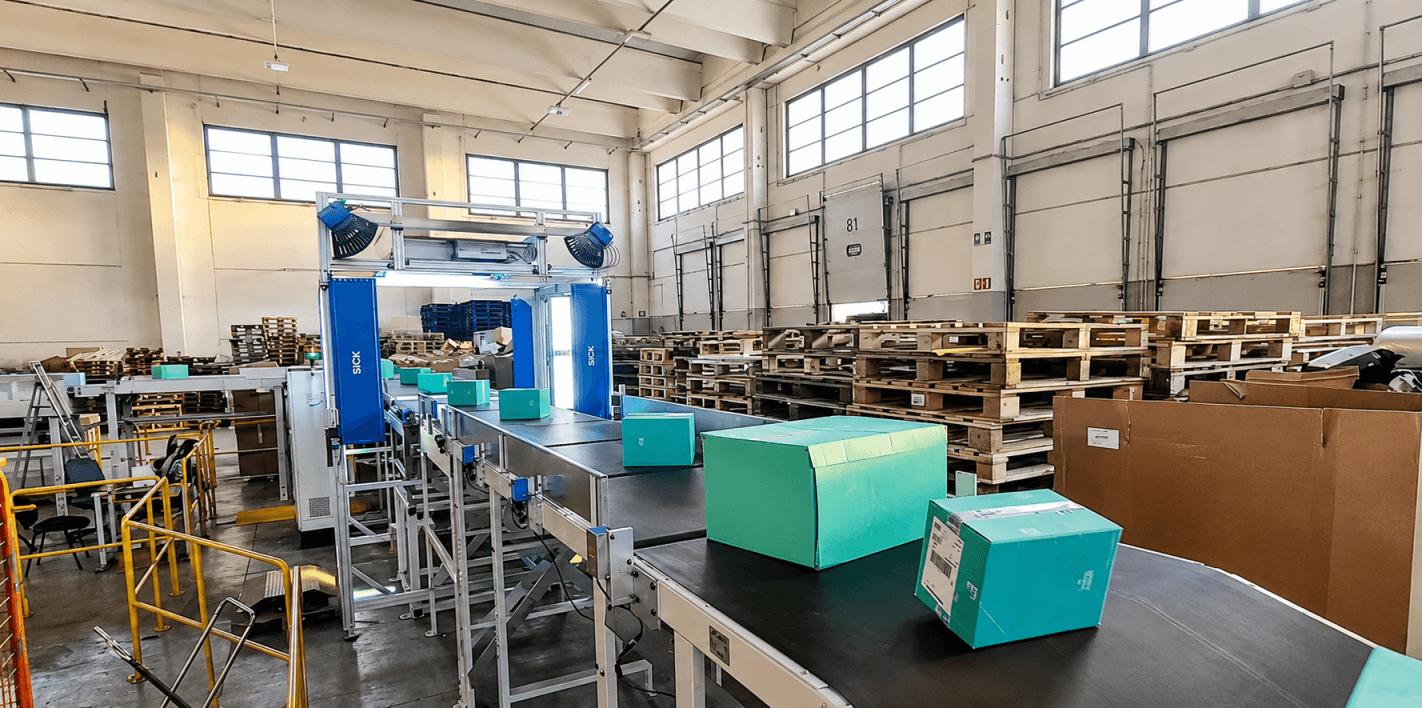
Conveyor systems built around your product flow
Move cartons, totes, parcels, pallets and other unit loads reliably between warehouse and production processes.
CoreConvey designs and integrates conveyor systems ranging from individual transport sections to complete connected flows with scanning, accumulation, routing, controls and software integration.
What do you need to move?
The right conveyor depends on the product base, dimensions, weight, stability, required speed and the process before and after the route.
Cartons and totes
Move regular, flat-bottomed loads between receiving, storage, picking, packing and dispatch.
Parcels and polybags
Support mixed parcel profiles through scanning, weighing, dimensioning, labelling and sortation.
Pallets and heavy loads
Transport robust unit loads between production, storage, palletising, wrapping and dispatch.
Irregular products
Use continuous belt surfaces or specialist concepts for products that do not travel reliably on rollers.
Conveyor types for different products and processes
A complete system may combine several conveyor technologies, each selected for a specific part of the process.
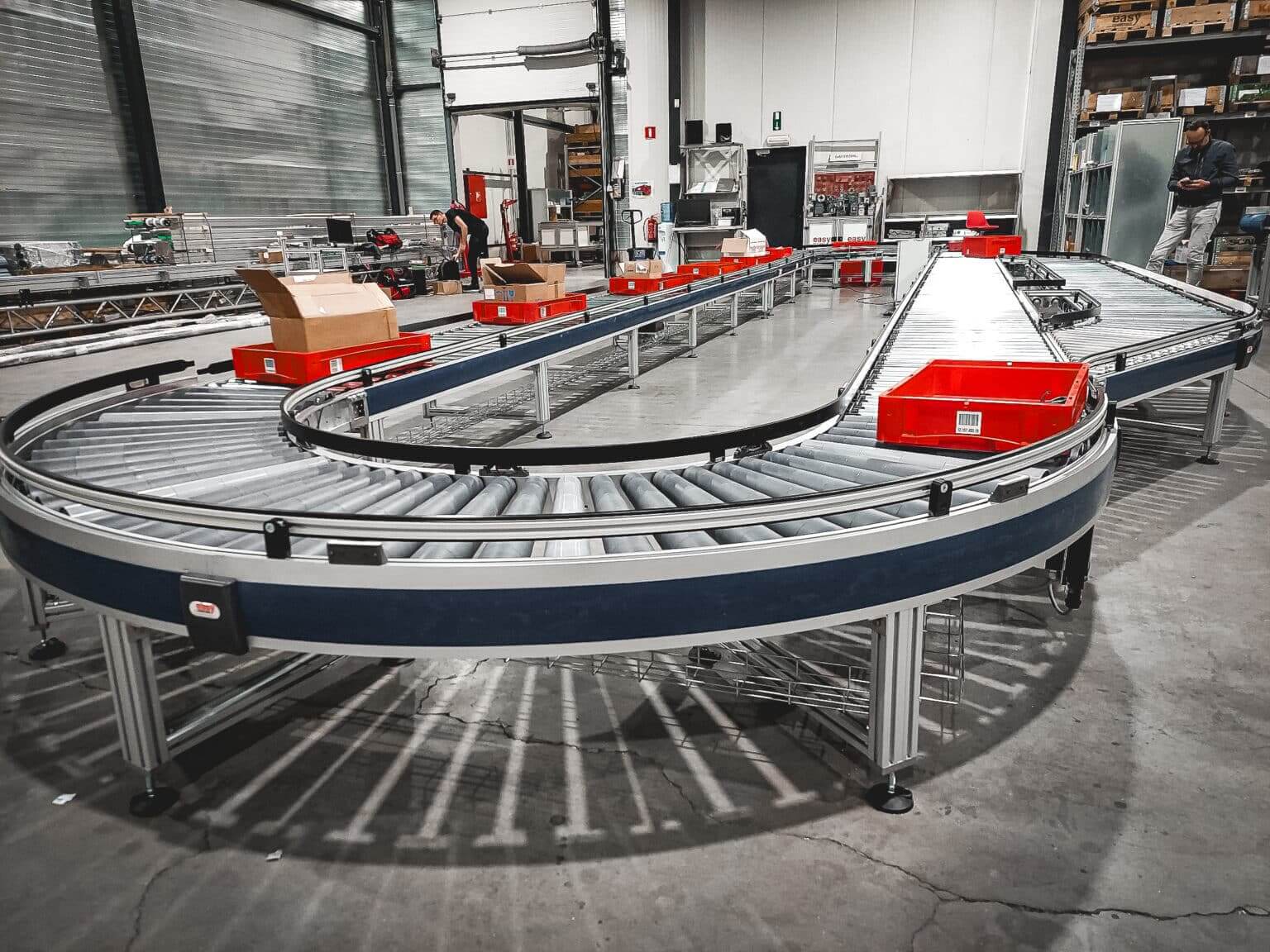
Controlled transport for cartons, totes and parcels
Reliable movement along defined routes with accumulation zones, stops, transfers, sensors and controlled release.

Simple movement in manual handling areas
A straightforward and economical route where manual movement or a controlled decline is suitable.

Continuous support for mixed and unstable products
Suitable for polybags, small parcels, irregular cartons and controlled spacing before scanning or processing.

Move goods between levels and automation zones
Connect floor levels, mezzanines, elevated sorters and process equipment while maintaining continuous flow.
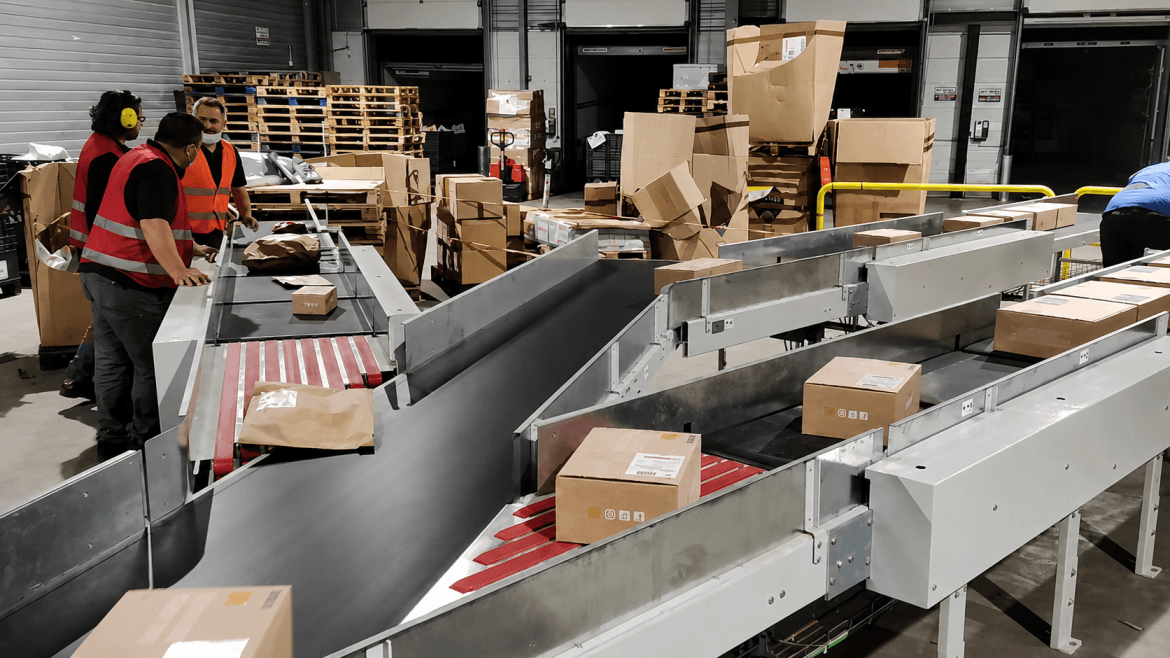
Combine lanes and direct products through the system
Merges, right-angle transfers and routing modules control product order, spacing and direction.
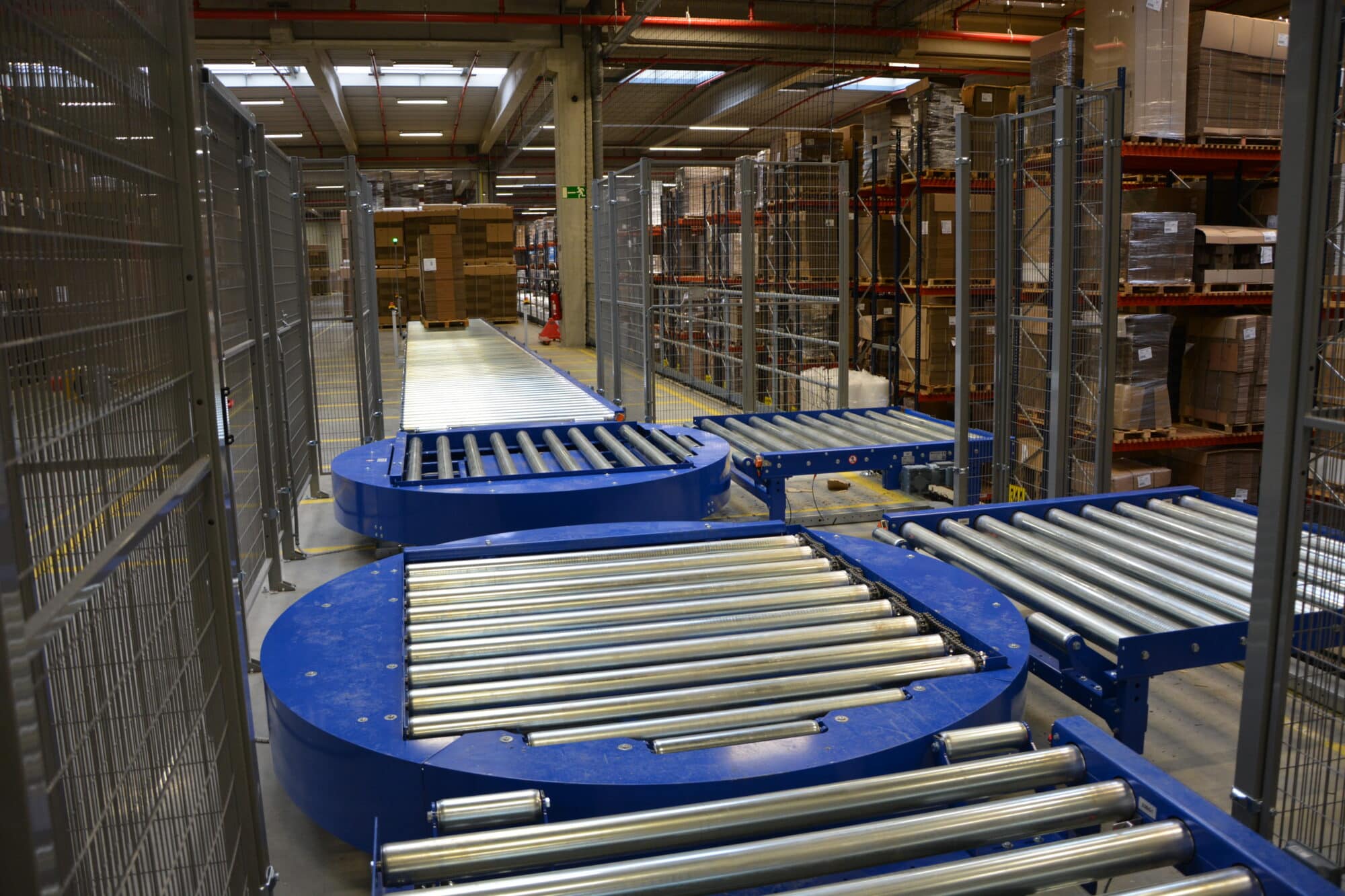
Heavy-duty transport for pallets and unit loads
Move loaded pallets between production, storage, palletising, wrapping and dispatch with controlled handling.
Balance processes with different operating speeds
Hold and release products in a controlled way between packing, scanning, sortation and downstream equipment.

Adapt the transport route to the operation
Curved, modular and specialist sections can be selected where product shape, footprint or environment demands another approach.
Which conveyor type is likely to fit?
This is an initial guide. Final selection should use representative product data and the complete process requirement.
| Conveyor type | Best suited to | Main strength | Key consideration |
|---|---|---|---|
| Powered roller | Cartons, totes and parcels | Controlled transport and accumulation | Load needs a suitable base |
| Gravity roller | Manual and low-complexity routes | Simple and economical | Limited automated control |
| Belt conveyor | Polybags and irregular loads | Continuous support | Belt type and access |
| Incline or decline | Movement between levels | Efficient height change | Product stability and gradient |
| Pallet conveyor | Pallets and heavy loads | Robust transport | Pallet quality and load data |
| Merges and transfers | Multi-lane systems | Controlled routing | Timing and control logic |
A conveyor is part of a process, not an isolated machine
The value comes from connecting transport, identification, accumulation, processing and routing into one coordinated flow.
CoreConvey considers what happens before products enter the conveyor, what decisions are made while they move and how queues, exceptions and downstream constraints are handled.
Connect physical movement with operational data
The conveyor needs to know when to move, stop, release, merge, divert and report an exception.
CoreConvey can integrate sensors, scanners, PLC control and WCS functionality with warehouse or production systems.
- Automatic routing
- Zero-pressure accumulation
- Product tracking
- Speed coordination
- Jam and exception handling
- Scanner integration
- WMS and ERP interfaces
- Status reporting
Start with one route or connect the complete operation
The project should match the actual constraint and provide a sensible route for future development.
Focused conveyor project
Remove one clear bottleneck with a defined transport solution.
- Packing-to-dispatch conveyor
- Production transfer route
- Accumulation before a scanner
- Connection between work areas
- Replacement of manual transport
- One pallet route
Complete connected system
Coordinate several conveyor technologies, processes and control layers.
- Receiving-to-dispatch flow
- Multi-zone fulfilment
- Scanning and sortation integration
- Production and palletising flow
- WCS-controlled routing
- New warehouse or expansion
The equipment is only one part of the result
A route must receive products consistently, create the correct spacing, handle queues, coordinate merges and release loads into the next process at the right time.
The layout must also provide safe operator access, practical maintenance space and a clear method for handling jams and exceptions.
What information helps us assess a conveyor project?
You do not need every answer before contacting us, but representative data makes it easier to identify the right starting point.
- Product or load type
- Minimum and maximum dimensions
- Minimum and maximum weight
- Average and peak throughput
- Starting and finishing points
- Available layout or drawing
- Required accumulation
- Existing equipment
- Controls and software needs
- Future growth expectations
Support throughout the conveyor project
CoreConvey coordinates the equipment, controls, integration and project delivery needed to turn a conveyor concept into a working system.
Understand and design
We review the load types, dimensions, weights, throughput, layout, current process and operational objectives before developing the conveyor concept.
Install and integrate
We coordinate equipment delivery, installation, sensors, PLC controls, software interfaces, testing and commissioning around the agreed project scope.
Support and develop
Once the system is operational, we can assist with troubleshooting, maintenance planning, control changes, upgrades and future expansion.
Conveyor system FAQs
Which conveyor type is right for our products?
Can conveyors be added to an existing warehouse?
Can CoreConvey integrate with existing conveyors?
Can the system connect to our WMS or ERP?
Do we need powered conveyors throughout?
Can the system be expanded later?
What information is needed for an initial concept?
Does CoreConvey install and commission conveyor systems?
Send us your layout, load data and required flow
We will review the application, identify missing information and recommend a practical next step. This may be a discovery call, drawing review, site visit, initial concept or budgetary proposal.


