Why Small, Modular Automation Often Beats “Big Bang” Projects
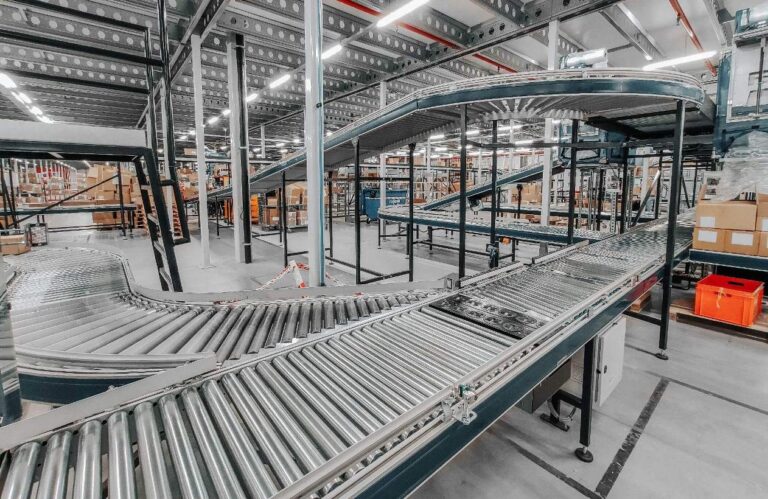
When I talk to people about new warehouse automation, they often picture massive systems: long conveyors running wall to wall, huge sorters, and a year-long project plan with a seven-figure price tag. For some operations, that makes sense. For many others, it doesn’t.
We see a different pattern emerging. More and more companies are choosing small, modular automation over large, all-at-once projects. For good reasons.
The problem with “big bang” automation
Large automation projects tend to promise a lot: maximum throughput, future-proof capacity, and minimal manual handling. But they also come with real downsides:
- High upfront cost that ties up capital early
- Long lead times before anything goes live
- High risk if volumes, layouts, or business models change
- Complex commissioning, often with painful ramp-up periods
With the crazy pace in e-commerce and last-mile delivery, those risks matter. Demand shifts, delivery models evolve, and space constraints change. Locking yourself into a single, oversized system too early can limit flexibility later.
Modular automation starts where you are
Modular automation flips the approach. Instead of designing for a hypothetical future, you automate the bit of the operation that hurts today whilst leaving room to expand later.
Examples include:
- Adding a compact sorter to remove a manual bottleneck
- Automating one outbound flow instead of the whole warehouse
- Introducing AMRs for transport before touching conveyors
- Using multiple small systems rather than one centralised sorter
The goal isn’t to automate everything at once. It’s to remove pain-points step by step.
Faster value, lower risk
One of the biggest advantages of modular systems is speed.
Smaller automation projects:
- Go live faster
- Are easier to test and adjust
- Deliver ROI earlier
- Require less organisational change
That matters not just financially, but operationally. Teams adapt more easily to gradual change than to a complete overhaul.
We often see sites where a single, well-placed system reduces manual handling by 30–50% almost immediately – without disrupting the rest of the operation.
Designed for real-world constraints
You know as well as us that warehouses are rarely blank canvases. Columns, low ceilings, fire zones, shared buildings, and limited floor space are the norm for us.
Modular systems are easier to fit around reality:
- Small footprints
- Flexible layouts
- Fewer structural changes
- Easier relocation if a site changes
This is especially relevant for urban hubs, micro-fulfilment sites, and OOH/locker networks, where space is tight and leases can be short.
Scaling without rework
A common fear is that starting small means hitting a throughput ceiling later. In practice, well-designed modular automation does the opposite.
If systems are planned with integration in mind:
- Additional units can be added in parallel
- Capacity grows linearly instead of in jumps
- Risk is spread over time, not concentrated in one decision
This is why we design solutions that can be networked, not replaced. Multiple compact systems working together often outperform a single large one all while being easier to maintain and adapt.
Software ties it all together
Modular doesn’t mean disconnected. The key is clean integration.
When automation connects properly to WMS or ERP systems—using clear interfaces like REST APIs or structured file transfers—each module becomes part of a bigger whole.
Good software design is what makes modular hardware scalable.
A more practical way forward
Automation doesn’t have to be all or nothing. For many operations, the smartest path is:
- Automate the biggest bottleneck
- Prove the benefits
- Expand where it makes sense
- Keep flexibility as the business evolves
That approach lowers risk, preserves capital, and keeps options open.
At CoreConvey, this is how we design systems—whether it’s a single conveyor run, a compact sorter like CoreCompact, or a growing network of automated processes.
If you’re considering automation but don’t want to overcommit too early, a modular approach is often the most practical place to start.
Want to explore what that could look like in your operation? Let’s talk.