

When is a parcel sorter financially viable?
A parcel sorter becomes financially viable when the annual value it creates can repay the investment within an acceptable period while improving the operation.
Labour savings matter. So do overtime, errors, missed dispatch cut-offs, recruitment pressure, space constraints and the value of handling future growth without adding more manual sorting.
How much can the operation reasonably invest?
The most useful early question is not “What does a sorter cost?” It is “How much could this operation invest and still achieve the required return?”
Current manual sorting
- 5 employees involved
- 4 sorting hours per day
- €30 fully loaded hourly cost
- 250 operating days per year
Annual sorting labour: €150,000
Recoverable annual benefit
- 60% of sorting labour: €90,000
- Avoided overtime: €15,000
- Lower error and rework cost: €10,000
- System operating cost: minus €15,000
Net annual benefit: €100,000
Investment envelope
- 2-year payback: €200,000
- 3-year payback: €300,000
- 4-year payback: €400,000
- 5-year payback: €500,000
The next question is whether a suitable solution fits inside that envelope.
This example is illustrative. A real business case should use validated operational data and an agreed project scope.
Calculate your maximum justifiable investment
Enter your current labour and operating costs. The result shows the investment envelope that would meet your chosen simple payback period.
This is a simple-payback calculation for early planning. It excludes financing, tax, depreciation, inflation and the time value of money.
Where is your operation on the viability curve?
There is no universal parcel-volume threshold. The economics depend on how much manual effort the current process consumes and what operational problem the sorter would solve.
Manual sorting is still simple and inexpensive
- Low daily and peak volume
- Few destinations
- One or two people sorting for short periods
- Little overtime or temporary labour
- No meaningful capacity or space constraint
The operation is approaching an economic tipping point
- Several employees involved in sorting
- Regular peak overtime
- Destination count is increasing
- Volumes are growing
- Errors or dispatch delays create measurable cost
Manual sorting is constraining capacity or service
- Substantial daily or peak volume
- Multiple shifts or seasonal labour
- High overtime or recruitment pressure
- Many destinations and short cut-off windows
- The building is approaching capacity
Three examples of very different business cases
These scenarios show why daily volume alone is not enough to determine viability.

Small regional operation
Manual sorting remains straightforward. Scanning, workstations or basic conveyor flow may be the stronger first investment.
Growing 3PL or e-commerce dispatch
Regular sorting labour, overtime and growth create enough potential value for a structured concept and ROI review.
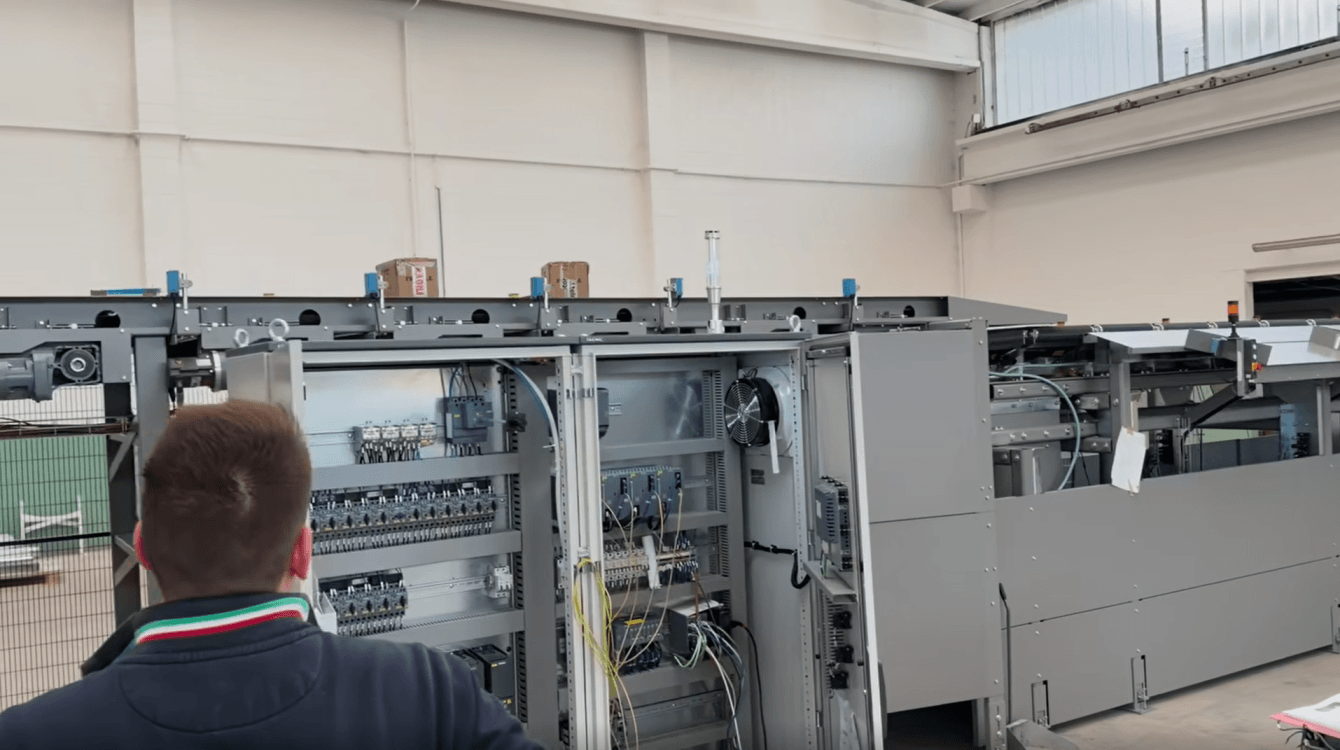
High-volume parcel operation
Short dispatch windows, significant labour and capacity pressure make the sorter part of a wider operational strategy.
Signs that manual sorting is becoming expensive
The business case often becomes visible in the operation before it appears clearly in a spreadsheet.
The financial calculation often misses important value
Labour reduction is usually the easiest benefit to measure. It is not always the largest source of value.
Separate hard savings from strategic value
Hard savings should form the conservative base of the business case. Capacity, service and space benefits can then be added where supported by evidence.
- Use validated labour and overtime figures
- Avoid assuming every sorting hour disappears
- Allow for maintenance and remaining manual work
- Show which benefits are measurable and which are strategic
Sometimes the right recommendation is not to automate yet
A sorter cannot correct every warehouse problem. The bottleneck may sit upstream or the current process may not yet justify dedicated sortation.

Investigate the process first when:
A credible integrator should be able to explain when a dedicated sorter is premature and what smaller improvement should come first.
Turn the investment envelope into a practical system assessment
The financial calculation establishes what the project may justify. The next stage determines whether the parcel profile, destination count, building and software environment support a suitable solution.
Confirm the current cost
Validate labour hours, overtime, temporary labour, error cost and expected growth.
Define the parcel profile
Document sizes, weights, surfaces, stability, barcode position and peak flow.
Compare system concepts
Assess suitable sorter technologies, infeed, scanning, discharge and integration.
Test the commercial fit
Compare the developed project budget with the maximum justifiable investment.
Parcel sorter viability FAQs
Is there a minimum parcel volume that makes a sorter viable?
What payback period should we use?
Should we include all current sorting labour as a saving?
How should we value future growth?
Can a sorter be viable without reducing headcount?
What annual operating costs should we allow for?
What information does CoreConvey need for a viability review?
What happens after the viability calculation?

Find out whether parcel sortation is financially viable for your operation
Send us your parcel volumes, labour input, destination count and operating schedule. We will help define the investment envelope and identify which sorter technologies deserve further investigation.


