

Automation for parcel hubs and delivery networks
Identify every parcel, route it accurately and prepare it for the next stage of the delivery network.
CoreConvey designs and integrates induction, data capture, conveyors, sortation, discharge systems and WCS controls for parcel hubs, carrier networks and regional delivery depots across Europe and the UK.

When volume, destinations and cut-off times all increase
Manual sorting can cope with a simple network. It becomes harder to control as parcel volume, route count and service complexity grow.
The problem is rarely one machine. Infeed quality, barcode performance, peak duration, destination count, discharge capacity and live routing logic all affect how many parcels the hub can process accurately inside the available window.
Uneven inbound flow
Vehicles, cages and induction stations release parcels in waves rather than a smooth, predictable sequence.
Too many manual decisions
Operators must read labels, remember routes and move parcels repeatedly under time pressure.
Destination growth
New depots, delivery routes, lockers and service levels create more outputs than the existing process can manage.
Limited dispatch windows
Late inbound parcels, rework and misroutes consume the time available before linehaul or local delivery departure.
Automation across the parcel journey
The strongest systems control the complete flow from induction to the final dispatch destination.
What CoreConvey can automate
The sorter is only one part of the system. Throughput and accuracy depend on how induction, data capture, routing, diversion and discharge work together.
Create a stable flow into the system
Combine several unload or induction points while controlling speed, spacing and downstream demand.
Explore conveyor systems →
Identify and verify every parcel
Capture barcode, image, weight and dimensional data before the routing decision is made.

Route parcels to the correct output
Use push, pop-up, swivel or cross-belt technology according to parcel profile, throughput and destination count.
Explore parcel sortation →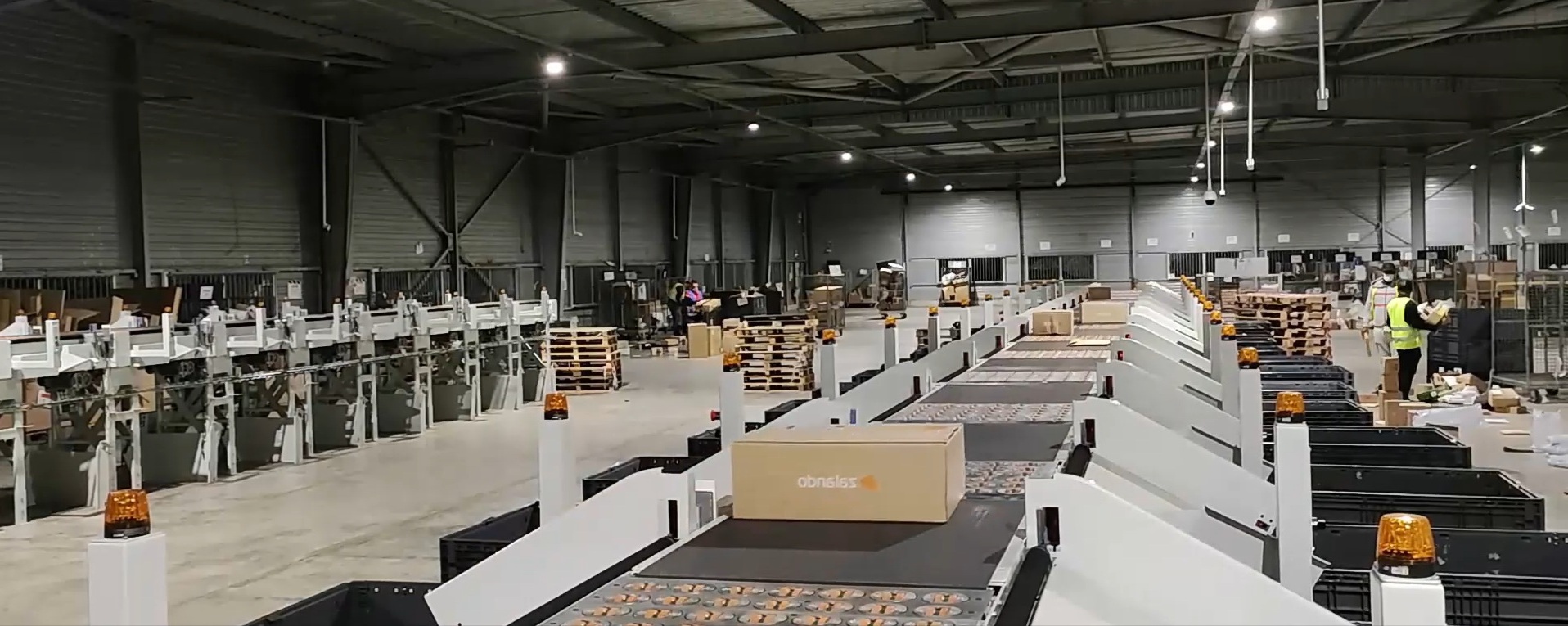
Build the right load at every destination
Direct parcels into chutes, lanes, bags, boxes, roll cages or containers with the accumulation needed for dispatch.

Add many outputs in a small footprint
Sort to routes, drivers, lockers, depots or end-drop locations without installing a conventional large loop sorter.
Discover CoreCompact →
Coordinate data, equipment and exceptions
Use live parcel data and network rules to control conveyors, scanners, sorters, outputs and operational status.
The parcel moves because the data says where it belongs
Reliable sortation depends on clean identification, clear routing rules and coordinated control of the physical equipment.
CoreConvey can exchange parcel, route and status information with WMS, TMS, carrier or operational platforms through an agreed interface. The WCS then coordinates scanners, conveyors, sorters and outputs while recording exceptions and live system status.
Built around the performance of the network
Increase parcels per hour
Control induction, spacing and routing so downstream equipment receives a more consistent flow.
Reduce manual sorting labour
Replace repeated label reading, walking, lifting and route decisions with automated identification and diversion.
Reduce misroutes and rework
Link every physical diversion to verified parcel and destination data.
Protect dispatch cut-offs
Process late inbound volume more quickly and reduce the time lost to manual staging and correction.
Add more network destinations
Expand routes, depots, lockers and service-level outputs without redesigning every upstream process.
Improve operational visibility
Use live parcel, route, exception and equipment data to understand what is happening inside the hub.
The fastest sorter is not automatically the right sorter
Throughput matters, but parcel size, stability, destination count, peak duration, discharge design, available space and future growth also change the answer.
Push sorter
Up to 2,000/hrA mechanical pusher moves the parcel from the main conveyor to a selected lane on one side.
Pop-up sorter
Up to 3,500/hrRising rollers or belts transfer parcels to left- or right-hand outputs in a flexible modular layout.
Swivel sorter
Typically 5,000/hrPowered roller or wheel modules steer parcels smoothly towards either side of the conveyor.
Cross-belt sorter
10,000+/hrIndividual powered carriers circulate around a loop and discharge parcels at many assigned destinations.

CoreCompact for regional hubs and final-mile networks
When the operation needs many route, driver, locker or depot-level outputs but cannot justify the footprint of a traditional large sorter, CoreCompact provides a modular alternative that can be deployed as one unit or as a coordinated network.
Common parcel hub automation projects
The right starting point depends on the network, building, destination count and operating window.
Merge inbound streams into one controlled sortation process
Connect several unload or induction points to scanning, routing and automated destination handling.
- Multiple induction positions
- Depot and route sorting
- Cage and dispatch-lane outputs
Identify parcels and allocate the correct carrier or service
Use data capture and routing logic to separate parcels by carrier, route, service level, destination or collection schedule.
- Barcode and image capture
- Weight and dimension checks
- Carrier-specific outputs
Prepare parcels for routes, drivers or locker locations
Replace floor sorting and manual route building with compact, granular destination outputs.
- Route-level sortation
- Driver or locker allocation
- Space-efficient deployment
Start with the bottleneck. Expand with the network.
A parcel hub does not have to move directly from manual sorting to a large, high-capacity loop sorter.
Build the flow in stages while keeping the upstream data, controls and layout ready for additional destinations and throughput.
Stabilise induction and identification
Control the inbound feed, create the required spacing and improve barcode or DWS data quality.
Automate the highest-value destinations
Add sortation for the routes, carriers or depots creating the most labour, congestion or error risk.
Add outputs and capacity
Expand induction points, destinations, sorter modules, discharge capacity and control functions as the network grows.
Measure the cost of every manual touch and misroute
Parcel automation can create value through both labour reduction and better use of the dispatch window.
Include induction labour, manual sorting, walking, lifting, route staging, overtime, rework, misroutes and peak staffing. Also consider the commercial value of adding destinations, extending cut-off times and processing more parcels inside the current building.
Illustrative dashboard only. Use the ROI calculator with your own parcel, labour and investment data.
How CoreConvey develops a parcel hub automation system
Parcel and network review
We assess parcel profiles, average and peak volume, routes, service levels, destinations and operational constraints.
Data and interface mapping
Barcode data, routing instructions, WMS or TMS interfaces, reporting and exception requirements are documented.
Concept and technology selection
Induction, data capture, sorter type, outputs, accumulation and controls are developed as one practical system.
Installation and commissioning
The equipment is installed, integrated and tested against representative parcels and live operating scenarios.
Support and network expansion
Routes, destinations, volumes and software logic can be adapted as the delivery network changes.

What we need to assess your parcel operation
The data you can gather to prepare for an automation investment
Peak duration, parcel stability, label quality, destination count and discharge design can all have an effect on the technology and layout.
- Average and peak parcels per hour
- Peak duration and daily operating window
- Minimum and maximum dimensions
- Parcel weight range
- Surface, shape and stability profile
- Barcode type, quality and label position
- Number of routes and destinations
- Required chutes, cages or dispatch lanes
- Current WMS, TMS or carrier systems
- Building layout and growth forecast
Parcel hub automation FAQs
What parts of a parcel hub can be automated?
How do we choose the right parcel sorter?
Can the system read damaged or poorly positioned barcodes?
Can parcel automation connect to our TMS, WMS or carrier platform?
How are misreads and routing exceptions handled?
When does CoreCompact make sense?
Do we need to automate the complete hub at once?
What information is needed for an initial concept?
Move more parcels through every dispatch window
Send us your parcel profile, route matrix, peak volume and layout. We’ll help identify the strongest technical and commercial route for induction, data capture, sortation and dispatch.


