

Automation for manufacturing and internal logistics
Connect material receipt, production supply, work-in-progress movement and finished-goods handling in one coordinated flow.
CoreConvey designs and integrates conveyors, pallet handling, AMRs, robotics, storage interfaces and control systems for manufacturing and industrial logistics operations across Europe and the UK.
When internal movement starts limiting production
A production line can only perform as well as the material flow feeding and clearing it.
Manual transport often grows gradually around the process. Forklifts, pallet trucks, staging areas and operator workarounds eventually become difficult to coordinate, leaving production exposed to waiting, congestion, handling damage and inconsistent replenishment.
Production waiting for materials
Lines slow down because components, packaging or pallets do not arrive in the correct sequence.
Forklift dependency
Frequent internal transport creates traffic, safety risks and pressure on skilled operators.
Uncontrolled work-in-progress
Products accumulate between processes without clear priorities, locations or live status.
End-of-line bottlenecks
Packing, palletising and finished-goods removal cannot keep pace with production output.
Automation across the manufacturing journey
The strongest systems coordinate inbound materials, production supply, work-in-progress and finished goods rather than automating isolated transfers.
What CoreConvey can automate
The solution is developed around load type, process sequence, required throughput, safety, available space and the systems already controlling production and inventory.

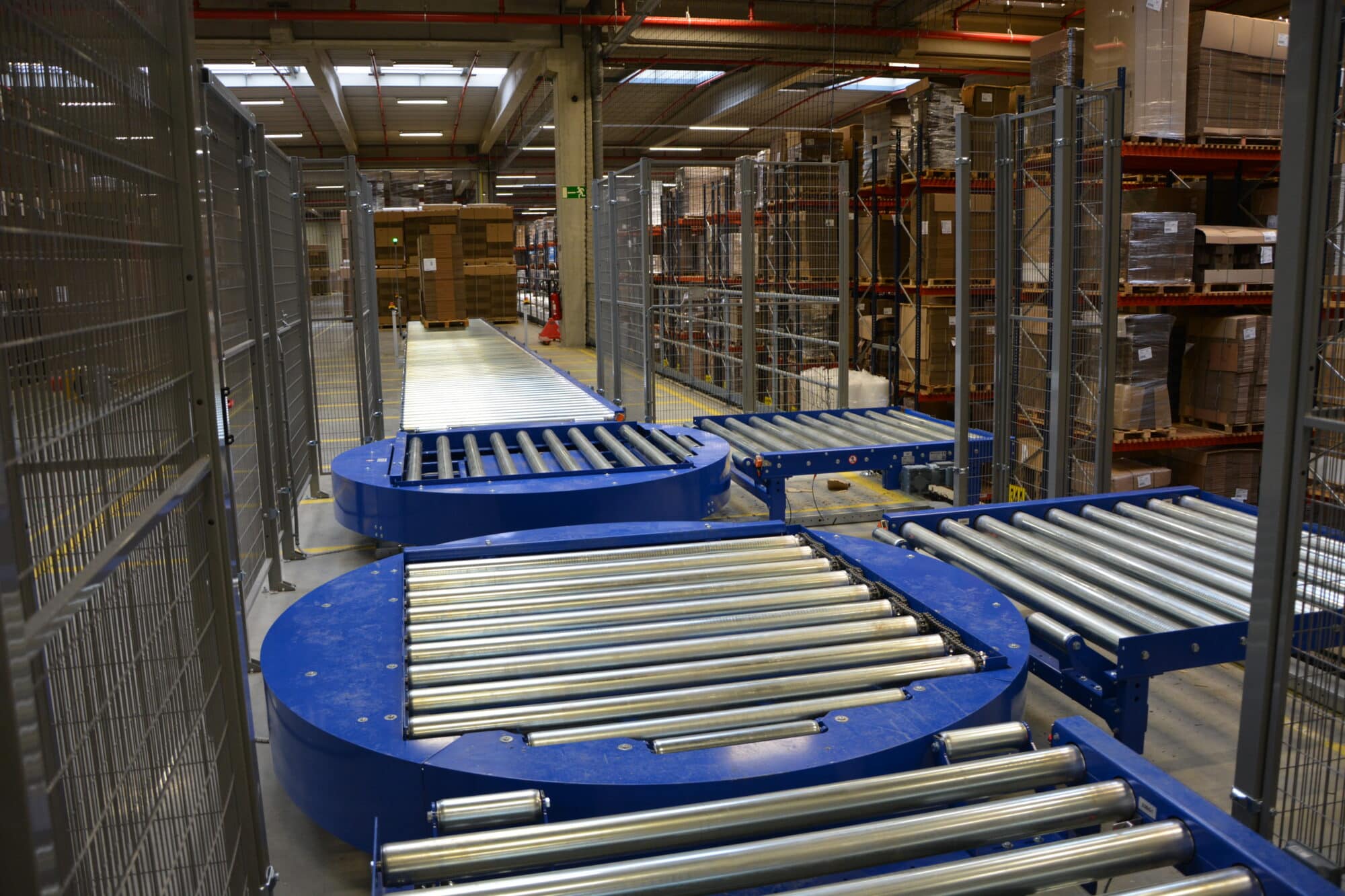
Move heavy loads along reliable, controlled routes
Connect production, storage, palletising and dispatch with powered rollers, chain conveyors, transfers and turntables.
Explore conveyor systems →
Connect work areas without repeated manual carrying
Move smaller loads between storage, kitting, production cells, packing and quality-control areas.
Explore conveyor systems →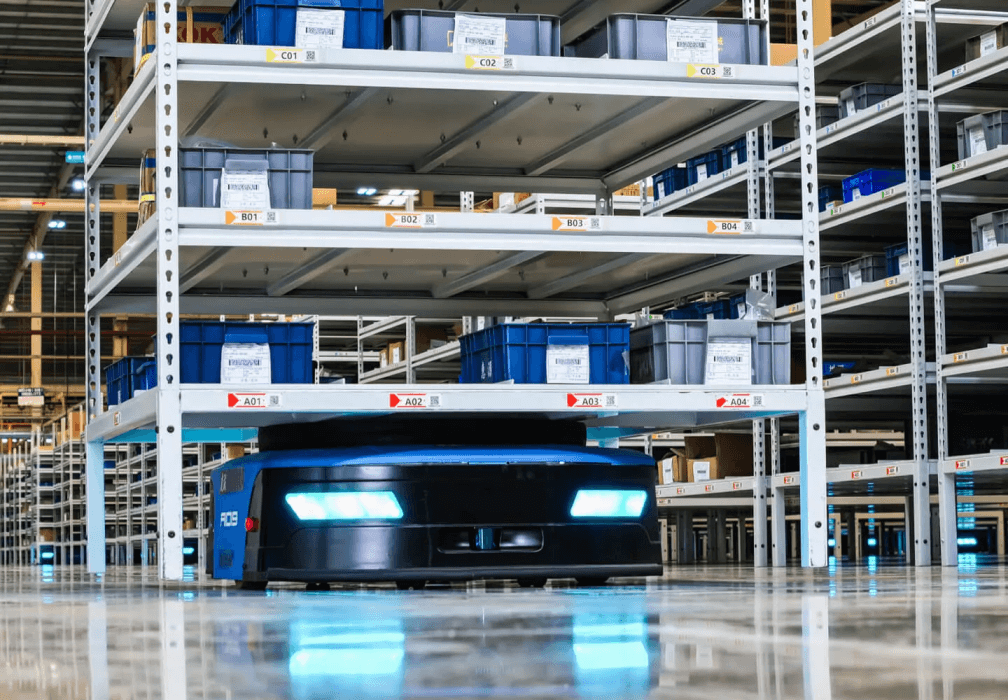
Automate routes that may change over time
Use mobile robots for pallets, totes, bins, racks and component replenishment where fixed conveyors would be too restrictive.
Explore robotics and AMRs →
Automate repetitive lifting and end-of-line handling
Integrate robot cells for product transfer, palletising and other repeatable tasks around conveyors and production equipment.
Explore SmartPick Robotics →
Create controlled capacity between production and dispatch
Use powered storage lanes and automated interfaces to hold raw materials, work-in-progress or finished pallets.

Connect production output with a repeatable packing process
Automate carton selection, robotic placement, labelling, sealing, verification and transfer into finished-goods flow.
Explore SmartPack AI →Physical movement must follow the production plan
Conveyors and robots only create value when they receive the correct instructions and return useful live information.
CoreConvey can connect automation with ERP, MES, WMS and production-control platforms through an agreed interface. The WCS and machine controls then coordinate routes, priorities, buffers, pallet movements, robot cells and exception handling across the physical process.
Built around production continuity and safer material flow
Reduce production waiting
Supply materials and remove finished goods before queues or shortages interrupt the process.
Reduce forklift movements
Move repeated high-frequency transfers onto conveyors, AMRs and controlled pallet routes.
Improve handling safety
Automate repetitive lifting, pallet transport and movement through busy production areas.
Control work-in-progress
Track materials and products through defined buffers, routes and process stages.
Increase end-of-line capacity
Connect packing, palletising, storage and dispatch so production output can keep moving.
Prepare for production growth
Develop modular routes, interfaces and control logic that can support new lines and processes.
Fixed, flexible or robotic automation?
The strongest manufacturing system often combines several technologies instead of forcing every load and route into one method.
Pallet conveyors
Continuous flowReliable transport between defined production, storage and dispatch positions.
AMRs
Flexible deploymentAutonomous movement without installing a fixed conveyor along every route.
Industrial robots
Repeatable handlingAutomated picking, transfer, packing or palletising within a controlled work cell.
Hybrid systems
Connected technologiesFixed conveyors carry the core flow while AMRs and robots manage flexible or complex transfers.
Automate palletising as part of the complete flow
A palletiser should not operate as an isolated robot cell. Product infeed, pallet supply, pattern control, safety, completed-pallet removal and connection to storage or dispatch all need to work as one coordinated process.
Connect loose products to a dispatch-ready carton
Packing can become the next bottleneck after production output increases.
SmartPack AI combines 3D item recognition, automated carton selection and robotic product placement with labelling, sealing, checking and transfer into downstream conveying or sortation. The result is a more controlled route from finished product to completed shipping carton.
Common manufacturing logistics automation projects
The best starting point is usually the material flow creating the most production risk, labour demand or congestion.
Deliver components and packaging without repeated manual transport
Connect warehouse, kitting and production areas with a controlled replenishment flow.
- Carton and tote conveyors
- AMR replenishment routes
- Sequenced line supply
Pack, palletise and remove finished products consistently
Coordinate robot cells, pallet supply, conveyors and finished-load transfer around production output.
- Robotic product handling
- Palletising and pallet transport
- Connection to storage or dispatch
Control products between production stages
Use tracking, conveyors and automated buffers to prevent uncontrolled staging and process starvation.
- Defined buffer locations
- Priority-based release
- Live material visibility
Start with one material-flow constraint. Build from there.
Automation does not need to begin with a complete factory redesign.
Remove the immediate bottleneck while creating a control and layout foundation that can connect more lines, storage areas and handling technologies later.
Remove the immediate constraint
Automate one repeated route, pallet transfer, line-feeding process or end-of-line handling task.
Connect adjacent processes
Link production, buffers, packing, palletising, storage and dispatch into a more coordinated flow.
Scale capacity and control
Add lines, routes, robot cells, storage interfaces and software functions as production requirements change.
Measure the cost of waiting, movement and manual handling
Manufacturing logistics automation can create value far beyond direct labour reduction.
Include forklift hours, walking, manual transfers, line waiting, overtime, product damage, work-in-progress, end-of-line congestion and future recruitment. Also consider the production capacity released when materials and finished goods move more consistently.
Illustrative dashboard only. Use the ROI calculator with your own labour, production and investment data.
How CoreConvey develops a manufacturing logistics system
Material-flow review
We assess load types, routes, production demand, shift patterns, peaks, interfaces and operational constraints.
Process and data mapping
ERP, MES, WMS, tracking, priorities, safety and exception requirements are documented.
Concept and technology selection
Conveyors, AMRs, robotics, storage, controls and layout are developed as one practical system.
Installation and commissioning
The equipment is installed, integrated and tested around representative loads and live production scenarios.
Support and phased development
Routes, products, production lines and control functions can be adapted as the operation changes.

What we need to assess your manufacturing operation
A reliable concept starts with real products, loads and operating scenarios.
Average throughput alone is not enough. Load stability, sequence, peak demand, buffer time, interfaces and production risk can all change the correct technology and layout.
- Load types: pallets, cartons, totes, bins or loose products
- Minimum and maximum dimensions and weights
- Average and peak movements per hour
- Production schedule and shift pattern
- Current routes and process sequence
- Required buffers and accumulation time
- Production line and machine interfaces
- Current ERP, MES, WMS or control systems
- Safety, access and installation constraints
- Building layout and three- to five-year growth plan
Manufacturing logistics automation FAQs
What parts of manufacturing logistics can be automated?
Should we use conveyors or AMRs?
Can automation work around existing production equipment?
Can the system connect to our ERP, MES or WMS?
What products can be palletised robotically?
Can the project be installed without stopping production?
Do we need to automate the complete factory at once?
What information is needed for an initial concept?
Keep materials, work-in-progress and finished goods moving
Send us your load profile, process sequence, peak movements and layout. We’ll help identify the strongest technical and commercial route for conveyors, AMRs, robotic handling, storage and controls.


