
Warehouse automation built around your operation
Practical systems that improve product flow, reduce manual handling and create capacity for growth.
CoreConvey designs and integrates warehouse automation for fulfilment centres, logistics operations, parcel hubs, distribution facilities and manufacturing environments across Europe and the UK.

Where is your warehouse losing time, capacity or control?
The right automation project starts with a process constraint, not with a preferred piece of equipment.
Too much manual transport
Employees spend too much time walking, pushing carts or carrying goods between work areas.
Sorting is limiting dispatch
Manual sorting is slow, labour-intensive or increasingly prone to mistakes and misroutes.
Picking cannot keep pace
Travel time and product movement are restricting pick rates, consolidation and packing output.
Packing is slow or inconsistent
Manual carton selection, product placement, labelling and sealing are limiting capacity and creating variation.
Unloading and palletising rely on manual labour
Container unloading and end-of-line palletising create repetitive lifting, safety concerns and staffing pressure.
Labour requirements keep rising
Every increase in volume creates another increase in staffing, overtime or temporary labour.
Space is restricting growth
Existing processes consume too much floor space or cannot create the capacity needed inside the current building.
Systems are disconnected
Equipment, WMS, ERP and warehouse processes do not exchange information or coordinate effectively.
Find the right automation starting point
Answer four questions to identify which solution family deserves closer investigation.
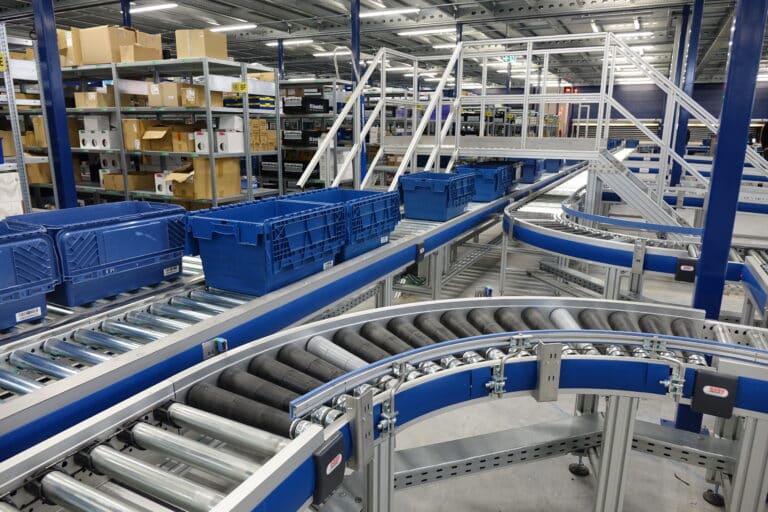
Move goods consistently between warehouse processes
Connect receiving, storage, picking, packing, sortation and dispatch with conveyor systems designed around your product profile and required flow.
- Powered roller conveyors
- Gravity conveyors
- Belt conveyors
- Modular conveyors
- Incline and decline conveyors
- Accumulation and buffering
- Carton and tote transport
- Pallet handling concepts
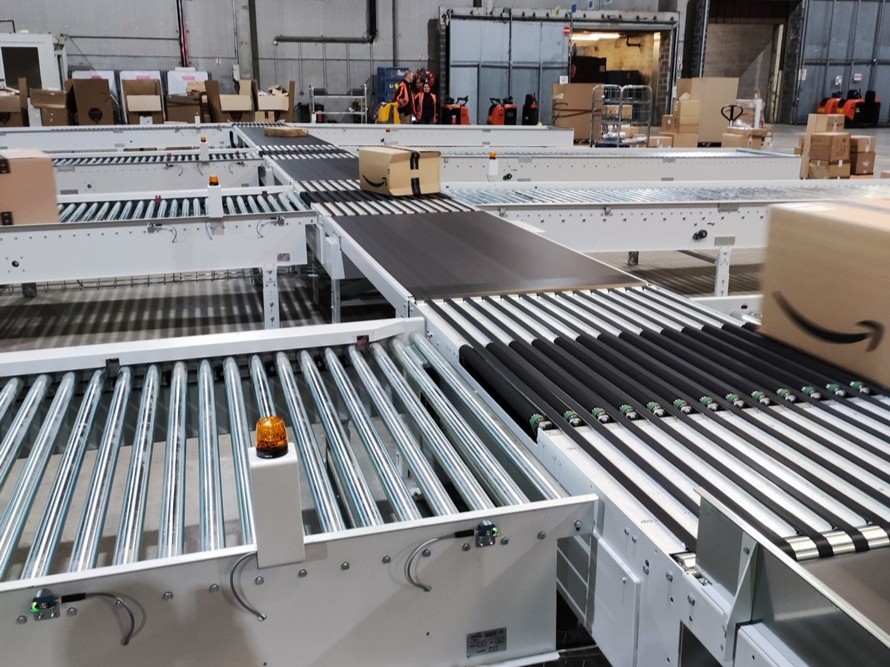
Identify, route and sort parcels automatically
Build a complete parcel-sortation process around your throughput, destination count, parcel profile and available footprint.
- Push sorters
- Pop-up sorters
- Swivel sorters
- Cross-belt sorters
- Scanning and data capture
- Chutes and accumulation
- Cage and container drops
- Carrier and route sorting
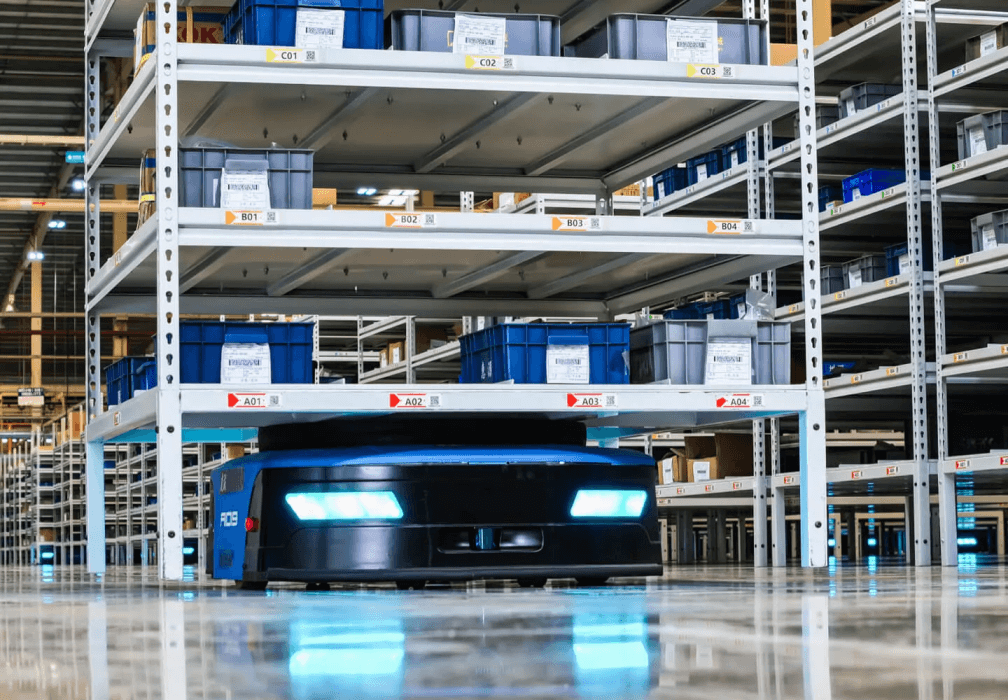
Automate movement without fixing every route in place
Use mobile robots to move totes, cartons, racks and pallets between warehouse processes while retaining flexibility for future layout changes.
- Tote and bin transport
- Goods-to-person concepts
- Rack-to-person systems
- Pallet AMRs
- Picking support robots
- Production line feeding
- Replenishment support
- Links between automation zones

Automate container unloading and palletising
Bring intelligent robotic handling into two of the most repetitive and physically demanding parts of the operation.
- Mixed-carton container unloading
- Robotic palletising
- 3D vision and adaptive picking
- Custom gripper configurations
- Pallet and carton conveyors
- Safety and controls integration
- Connection to warehouse systems
- Reduced repetitive lifting

Turn loose items into dispatch-ready cartons
Automate carton selection, robotic product placement, labelling, sealing and transfer into the next warehouse process.
- Automated carton selection
- Configurable case erectors
- 3D item recognition
- AI-controlled robotic packing
- Automatic label application
- Carton closing and sealing
- Weight and volume verification
- Connection to conveyors and sortation

High-destination sorting in a compact footprint
CoreCompact is designed for operations that need granular parcel sorting without the footprint of a traditional large-scale sorter.
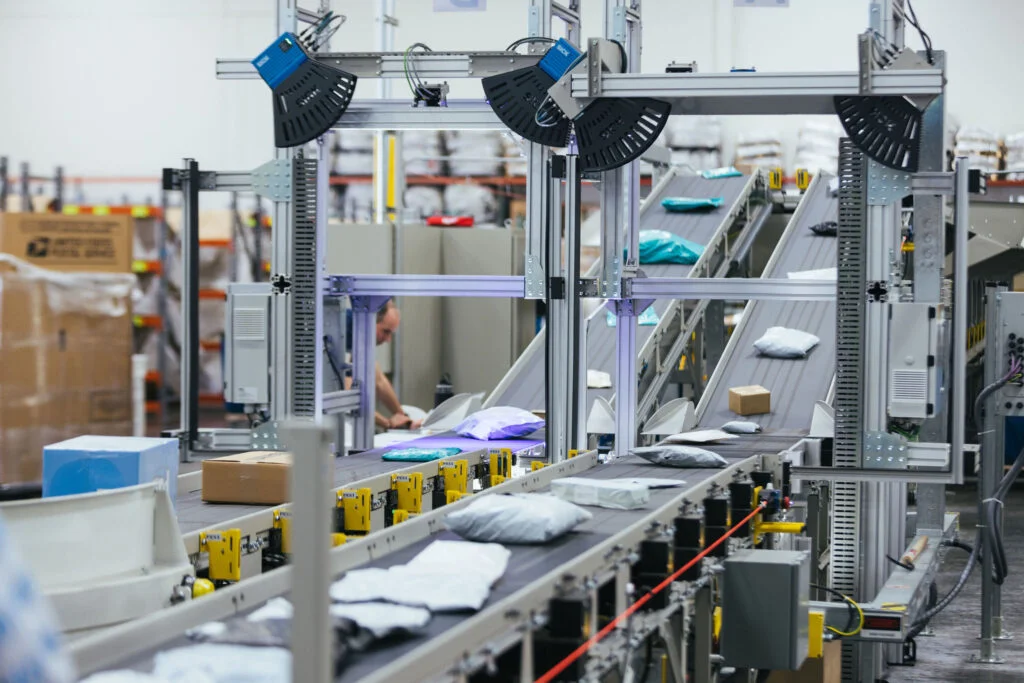
Know what is moving through the system
Capture the information needed to identify, verify and route every item through the correct process.
- Barcode reading
- Image capture
- Parcel weighing
- Dimensioning
- Label print and apply
- Parcel verification
- Exception handling
- Operational reporting
Connect physical movement with operational data
Automation works properly only when equipment receives the right instructions and returns useful live information.
- WCS routing logic
- WMS and ERP integration
- REST API interfaces
- FTP data exchange
- Equipment status monitoring
- Parcel and tote tracking
- Operational reporting
- Exception management
More than individual pieces of equipment
A conveyor can move a box. A scanner can identify it. A robot can pick or pack it. A sorter can route it.
The real value comes when each component works as part of one coordinated process, with the right controls, operational rules and data flow behind it.
What does the system need to achieve?
Move more with the same workforce
Reduce repeated transport and increase output without proportional headcount growth.
Reduce cost per parcel or order
Remove unnecessary touches, overtime, rework and inefficient product movement.
Improve accuracy
Use scanning, vision, software and controlled routing to reduce errors and misroutes.
Create more capacity
Remove the process constraint before expanding the building or adding another shift.
Handle peak periods
Build throughput, buffering, packing and routing capacity around real peak requirements.
Prepare for growth
Develop modular equipment and controls that can support new routes, stations and technologies.
Fixed, flexible or hybrid automation?
The strongest answer may combine several technologies rather than forcing the complete operation into one method.
Reliable flow along stable routes
Best where throughput is consistent, routes are well defined and continuous movement matters.
- Conveyors
- Sorters
- Lifts and transfers
- Accumulation systems
Hybrid automation
Fixed automation handles the core high-volume flow while robots and intelligent work cells automate flexible or complex handling tasks.
- Conveyors for repeatable routes
- AMRs for flexible connections
- Sorters for outbound destinations
- Robotic packing and palletising
- Vision-guided container unloading
- Shared controls and data
Adaptable movement through changing layouts
Best where routes change, phased deployment matters or a fully fixed system would be too restrictive.
- AMRs
- Goods-to-person systems
- Rack-to-person concepts
- Mobile picking support
Automation for different warehouse environments
E-commerce fulfilment
Picking, packing, parcel transport, carrier sortation and peak-period capacity.
3PL operations
Flexible systems supporting multiple customers, processes and changing volume profiles.
Parcel and delivery hubs
Data capture, routing, high-destination sorting and dispatch preparation.
Retail distribution
Carton, tote and store-order movement through picking, consolidation and dispatch.
Manufacturing logistics
Line feeding, robotic palletising, work-in-progress movement and finished-goods handling.
Pharmaceutical logistics
Controlled product movement, traceability, sorting and space-efficient handling.
Start with one process or redesign the complete flow
Focused modular project
Remove one clear constraint with a lower initial investment and a defined route for later expansion.
- Packing-to-dispatch conveyor
- Carrier or route sorter
- AMR transport route
- SmartPack automated packing station
- SmartPick unloading or palletising cell
- Scanning and label application
Complete turnkey system
Coordinate equipment, robotics, controls, integration and installation under one connected project scope.
- Receiving-to-dispatch automation
- Complete parcel-sortation system
- Integrated pick, pack and palletise flow
- Multi-zone fulfilment operation
- Connected conveyor, robotics and WCS project
- New warehouse or major expansion
Tools to support your automation decision
Warehouse Automation ROI Calculator
Estimate labour savings, net annual benefit, payback and five-year return using figures from your own operation.
Calculate your ROIParcel Sorter Selector
Compare push, pop-up, swivel and cross-belt sorters and receive an indicative starting recommendation.
Use the sorter selectorWMS vs WCS Guide
Understand where warehouse management ends and live equipment routing and control begin.
Read the guideHow CoreConvey develops the project
Understand
Review volumes, products, labour, layout, peaks, bottlenecks and growth plans.
Develop
Compare technologies and design the physical and digital workflow.
Engineer
Define equipment, robotics, controls, software interfaces, safety and project scope.
Deliver
Install, integrate, test, commission and train the operational team.
Support
Maintain, troubleshoot, upgrade and expand the system as requirements change.
What should you prepare before speaking to an integrator?
Good project data makes it easier to compare technologies and identify what is genuinely worth automating.
- Current process map
- Average and peak throughput
- Product, carton and load dimensions
- Minimum and maximum weights
- Staffing and shift pattern
- Error and exception data
- Existing equipment
- WMS, ERP or OMS details
- Building layout
- Three- to five-year growth
- Target implementation timing
- Available budget range
Warehouse automation FAQs
What warehouse processes can CoreConvey automate?
Do we need a complete warehouse automation system?
Can new automation integrate with existing equipment?
Can CoreConvey connect to our current WMS or ERP?
When should we choose conveyors instead of AMRs?
How do we calculate the return from automation?
Can the system be expanded later?
How long does a warehouse automation project take?
Does CoreConvey support installation and commissioning?
Can CoreConvey automate packing, palletising and container unloading?
Can an existing system be upgraded or retrofitted?
Let’s find the automation that genuinely improves your flow
Send us your current process, volumes and operational constraints. We’ll help identify what is worth automating, which technologies fit and where the strongest first return is likely to come from.


