
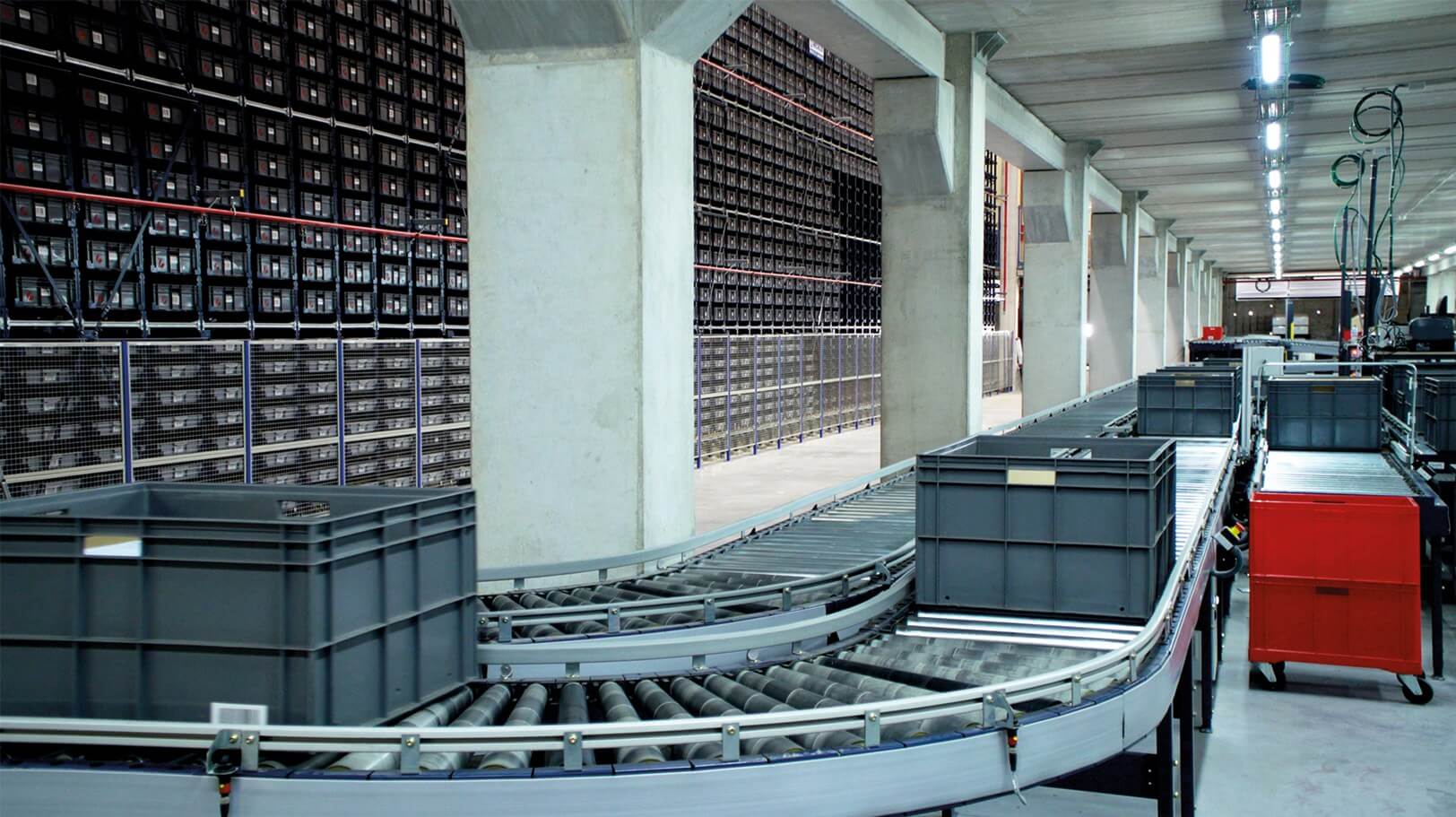
Warehouse automation for retail distribution centres
Connect inbound goods, store-order picking, consolidation and route-based dispatch in one coordinated retail distribution flow.
CoreConvey designs and integrates conveyors, tote and carton handling, AMRs, sortation, pallet systems, scanning and controls for retailers, wholesalers and branch networks across Europe and the UK.

When store volumes, routes and order profiles become harder to manage
A distribution centre must supply every store accurately while working backwards from fixed vehicle departures and delivery windows.
Manual processes often grow around individual warehouse areas. Totes wait between zones, order lines are moved by trolley, completed store orders occupy valuable floor space and staff spend increasing time finding, checking and staging the correct loads for dispatch.
Store-order complexity
Each store may require a different mix of products, quantities, containers and replenishment frequencies.
Fixed dispatch windows
Picking and consolidation must finish in time for planned vehicles, routes and store delivery slots.
Seasonal and promotional peaks
Campaigns, launches and seasonal ranges can change the required volume and product mix very quickly.
Repeated manual movement
Totes, cartons, pallets and roll cages are transferred repeatedly between picking, consolidation and dispatch.
Automation across the retail distribution journey
The strongest systems coordinate the complete movement from supplier receipt to store-ready dispatch rather than automating isolated transfers.
What CoreConvey can automate
The system is developed around product and load profiles, store-order volumes, picking zones, dispatch routes, available space and the software already controlling inventory and fulfilment.
Move supplier goods into the correct warehouse process
Connect unloading, receipt, decanting, storage and picking replenishment with controlled carton and pallet movement.
Explore conveyor systems →
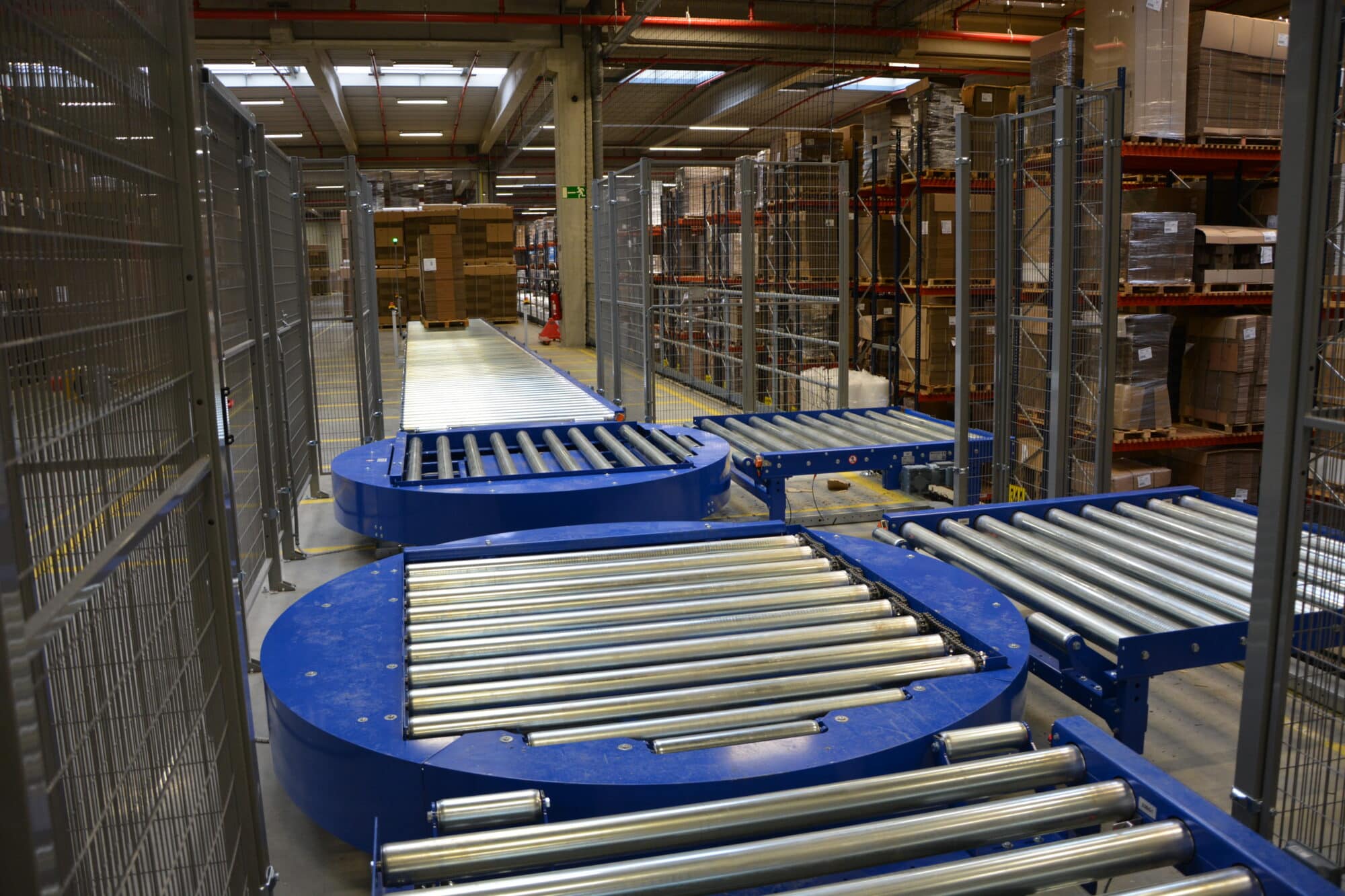
Connect picking zones without repeated manual transport
Move totes and cartons between storage, picking, consolidation, checking and dispatch without relying on trolleys for every transfer.
Explore conveyor systems →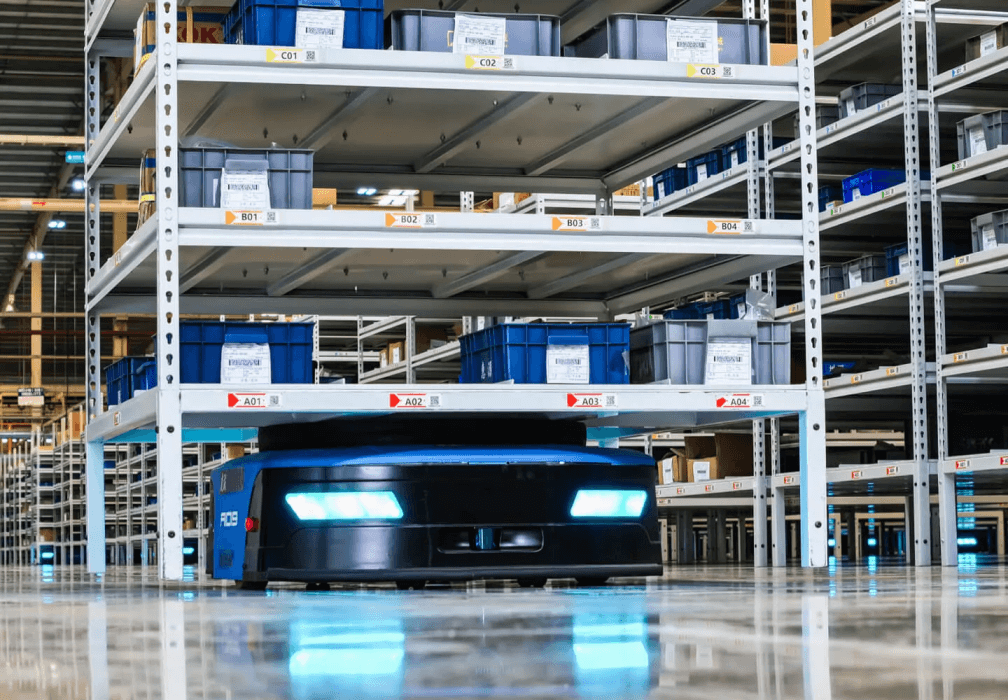
Use AMRs where routes, destinations or layouts change
Support stock replenishment, tote transport and movement between zones without installing fixed conveyors along every route.
Explore robotics and AMRs →
Direct completed loads to the correct outbound destination
Sort cartons, totes and parcels by store, branch, region, route, vehicle, departure time or handling requirement.
Explore parcel sortation →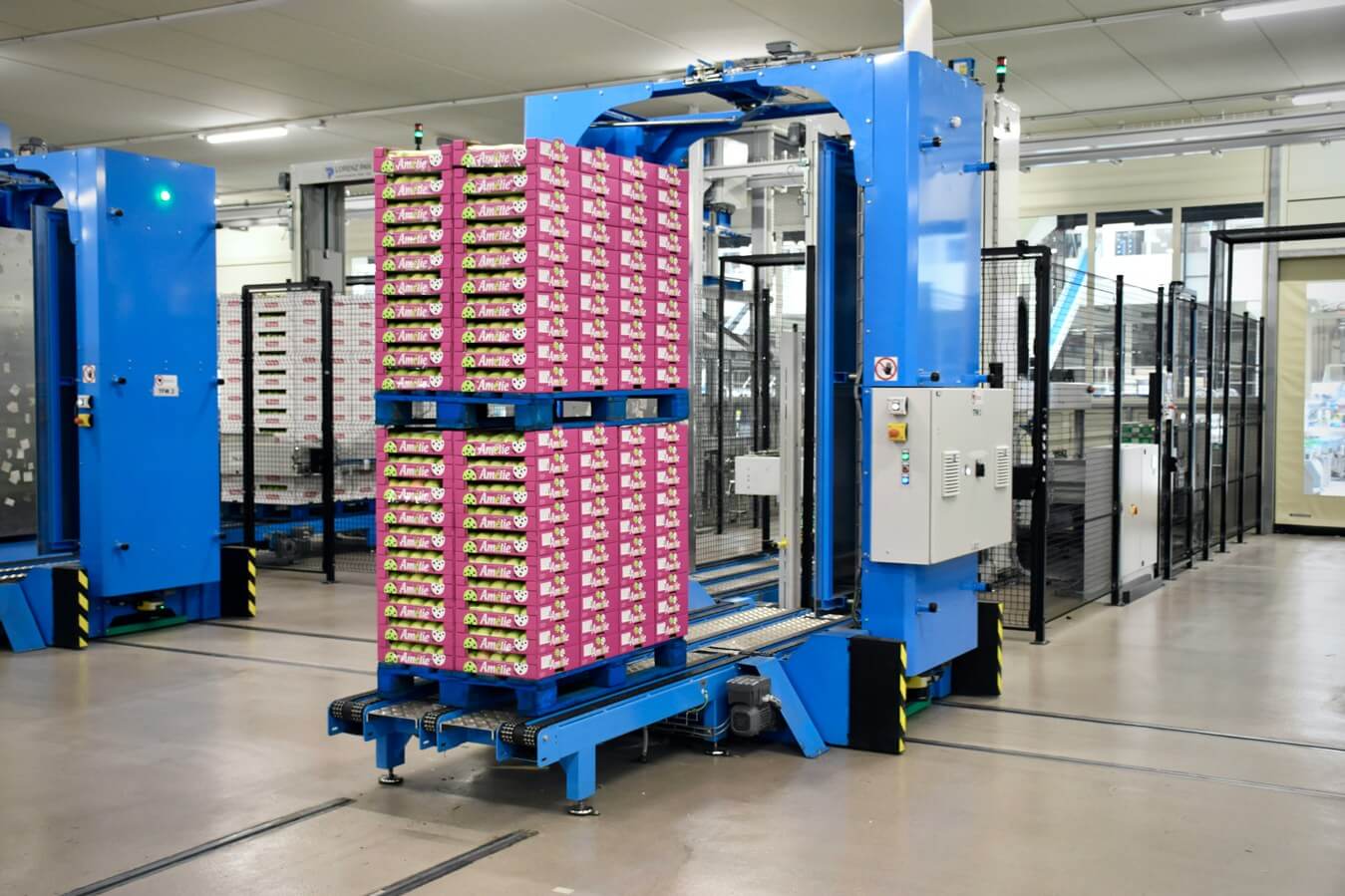
Prepare stable store loads for staging and transport
Connect pallet conveying, accumulation, automatic strapping and transfer into store lanes, staging or vehicle-loading areas.

Verify every load before it reaches dispatch
Capture barcodes, images, dimensions and weights to confirm identity, destination, routing and exception status.
Coordinate store replenishment, click-and-collect and e-commerce
Shared inventory and equipment require clear priorities, routing rules and live status across every channel.
CoreConvey can connect physical automation with ERP, merchandising, WMS and order platforms through an agreed interface. The WCS and controls then coordinate equipment routes, store waves, consolidation, channel priorities, buffers, tracking and exceptions across the operation.
Built around reliable store replenishment
Process store orders faster
Keep totes, cartons and pallets moving between picking, consolidation and dispatch.
Reduce walking and transport
Remove repeated trolley movement and low-value manual transfers between warehouse zones.
Improve consolidation accuracy
Track and verify order lines before releasing complete store loads into outbound flow.
Use labour more effectively
Focus employees on picking, checking and exceptions instead of repeated internal transport.
Protect dispatch deadlines
Sequence orders and routes around planned departures, vehicle loading and delivery windows.
Absorb retail peaks
Create capacity for promotions, range changes and seasonal demand without rebuilding every process.
Conveyors, AMRs, pallet handling or a hybrid system?
The correct approach depends on load type, route stability, throughput, distance, space and how quickly the operation is expected to change.
Conveyor systems
Continuous movementReliable transport along defined routes between picking, consolidation and dispatch.
AMRs
Flexible deploymentAutonomous transport that can support changing destinations and phased expansion.
Pallet handling
Store-ready loadsControlled conveying, accumulation, strapping and staging of completed pallets.
Hybrid systems
Connected technologiesUse fixed equipment for the core flow and flexible transport where routes or demand vary.
Sort every order to the correct store, route or dispatch lane
Completed cartons, totes and parcels can be identified and routed automatically according to operational data. The correct sorter depends on throughput, item profile, destination count, available space and how the loads will be accumulated after each divert.
Move completed store orders from consolidation to dispatch
Store-ready loads must be secured, staged and released in the correct sequence for outbound transport.
CoreConvey can connect pallet conveyors, accumulation, automatic strapping, empty pallet supply, AMR movement and dispatch-lane staging. The layout can be developed around the load carrier used by each operation, including pallets, roll cages, totes and cartons.
Common retail distribution automation projects
The strongest starting point is usually the process that is threatening dispatch performance, labour efficiency or store service.
Connect picking, consolidation and store dispatch
Replace disconnected manual transfers with a controlled tote, carton and pallet flow.
- Multi-zone order movement
- Store-order consolidation
- Route-based outbound handling

Use shared automation across several fulfilment channels
Coordinate store replenishment, click-and-collect and direct-to-consumer orders through common infrastructure.
- Channel-specific priorities
- Shared inventory and equipment
- WMS and WCS routing rules
Sort completed orders within a compact regional operation
Prepare cartons and totes for branches, delivery routes or local vehicle departures.
- Compact conveyor layouts
- Store and route allocation
- Modular capacity growth
Start with one retail bottleneck. Build a connected operation from there.
Retail distribution automation does not need to begin with a complete site transformation.
Remove one immediate constraint while creating the layout, controls and interfaces needed to connect more zones, stores, routes and channels later.
Remove the immediate bottleneck
Automate one process such as transport from picking to consolidation, store sortation or pallet staging.
Connect adjacent processes
Link picking, consolidation, verification, route sorting and dispatch into a coordinated flow.
Scale across channels and sites
Add stores, routes, picking zones, sort destinations, automation modules or regional facilities as requirements grow.
Measure operating cost and store-service impact
The commercial case should reflect how the current process affects labour, capacity, accuracy and delivery performance.
Include manual transport hours, overtime, temporary labour, consolidation errors, missed vehicle departures, seasonal staffing and the cost of expanding the building. Also consider the capacity gained when more store orders can be processed inside the same footprint and dispatch window.
Illustrative dashboard only. Use the ROI calculator with your own operational, labour and investment data.
How CoreConvey develops a retail distribution system
Retail-flow review
We assess stores, order profiles, SKU ranges, picking zones, delivery routes, peaks and current operational constraints.
Data and process mapping
ERP, merchandising, WMS, store waves, priorities, tracking and exception requirements are documented.
Concept and layout
Conveyors, AMRs, sortation, pallet handling, scanning and controls are developed as one practical system.
Integration and commissioning
The equipment is installed, connected and tested around representative products, store orders and dispatch scenarios.
Support and expansion
Routes, stores, product ranges, channels and control functions can be adapted as the retail operation changes.

What we need to assess your retail distribution operation
A useful concept starts with real store profiles, products, routes and peak-period data.
Average daily volume is not enough. Order-line mix, picking waves, load carriers, dispatch schedules and promotional peaks can all change the correct technology and layout.
- Number of stores, branches and fulfilment channels
- Average and peak store orders per day or hour
- Average order-line profile and SKU count
- Carton, tote, roll-cage and pallet dimensions
- Picking zones and current consolidation process
- Number of delivery routes and store destinations
- Dispatch schedule and vehicle departure windows
- Current staffing by process and shift
- Existing ERP, merchandising, WMS or order platforms
- Building layout and three- to five-year growth forecast
Retail distribution centre automation FAQs
What parts of a retail distribution centre can be automated?
Can one system support stores and e-commerce orders?
How can orders be sorted to individual stores?
Are conveyors or AMRs better for retail distribution?
Can automation work with our existing WMS or ERP?
Do we need to automate the complete distribution centre?
Can the system handle cartons, totes and pallets?
What information is needed for an initial retail automation concept?
Process more store orders without adding more manual movement
Send us your store profiles, order volumes, delivery routes, load types and current warehouse process. We’ll help identify where conveyors, AMRs, sortation, pallet handling, scanning and controls can create the strongest operational return.


