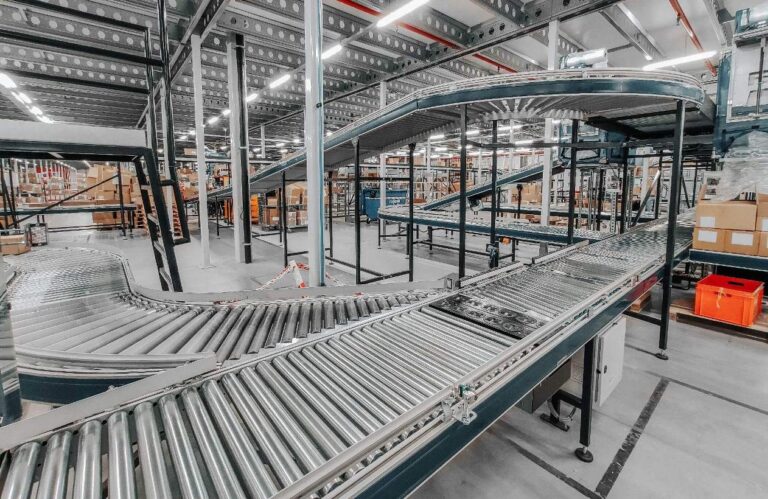
Parcel Sorter Types Explained: Push, Pop-Up, Swivel and Cross-Belt Sorters
Choosing the right parcel sorter can have a major impact on throughput, labour requirements, accuracy and future scalability.
While many businesses start by asking how many parcels per hour a system can process, throughput is only one part of the equation. Parcel dimensions, destination count, available space, growth plans and integration requirements all influence which technology is the best fit.
In this guide, we’ll explain the four most common parcel sorter technologies used in modern warehouse and parcel automation systems:
- Push Sorters
- Pop-Up Sorters
- Swivel Sorters
- Cross-Belt Sorters
If you’re unsure which technology suits your operation, you can also use our interactive Parcel Sorter Selector:
👉 Try the Parcel Sorter Selector

Why Choosing the Right Sorter Matters
A parcel sorter is often the heart of a sortation system.
Its job is simple:
Receive parcels, identify them, and direct them to the correct destination.
However, different sorter technologies achieve this in very different ways.
Choosing a sorter that is too small can create bottlenecks and limit growth.
Choosing a sorter that is unnecessarily large can increase capital costs without delivering additional value.
The goal is to find the technology that matches both your current operation and your future plans.
Push Sorters
Push sorters are one of the simplest and most economical parcel sorting technologies available.
A mechanical pusher moves the parcel sideways from the main conveyor into a designated lane or destination.
Advantages
- Simple mechanical design
- Lower investment cost
- Compact footprint
- Suitable for a wide range of parcel sizes
- Easy to maintain
Considerations
- Typically limited to single-sided sorting
- Lower throughput compared to more advanced technologies
- Less suitable for very high-volume operations
Typical Applications
- Regional distribution centres
- Returns processing
- Smaller parcel operations
- Low to medium throughput environments
Push sorters are often the ideal entry point into automated parcel sorting.

Pop-Up Sorters
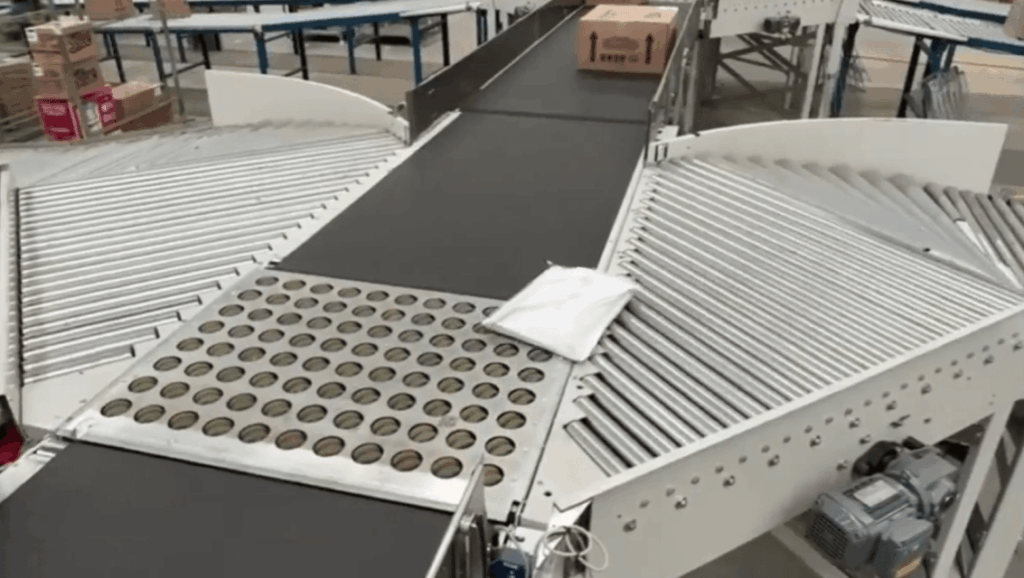
Pop-up sorters offer greater flexibility than push sorters while maintaining a relatively compact footprint.
The system raises a set of rollers or belts beneath the parcel and transfers it to either side of the main conveyor.
Advantages
- Sorting to both left and right
- Higher throughput
- Flexible layouts
- Good balance between cost and performance
Considerations
- More complex than push sorters
- Requires careful design for optimal throughput
Typical Applications
- E-commerce fulfilment centres
- Third-party logistics providers (3PLs)
- Mid-volume parcel operations
For many growing operations, pop-up sorters provide the ideal balance between performance and investment.
Swivel Sorters
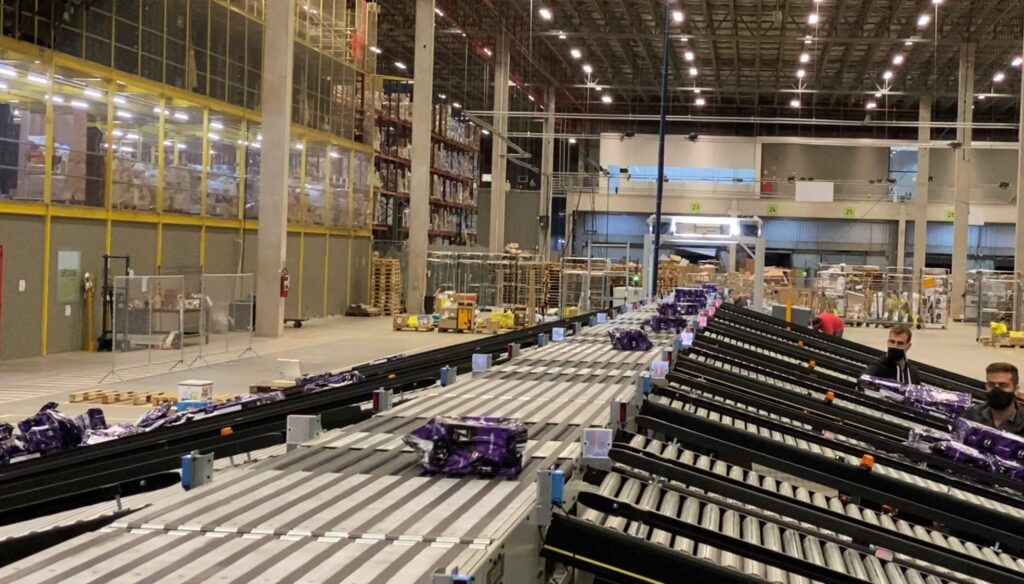
Swivel sorters use powered roller or wheel modules that rotate to steer parcels smoothly towards the correct destination.
Rather than pushing the parcel sideways, the rollers actively guide it in the required direction.
Advantages
- Smooth parcel handling
- Higher throughput capability
- Precise diversion control
- Fully electric operation available
- Excellent flexibility
Considerations
- Higher investment than push or pop-up sorters
- Typically used where throughput requirements are greater
Typical Applications
- High-performance fulfilment operations
- Parcel hubs
- Distribution centres handling mixed parcel profiles
Swivel sorters are often the preferred solution when operations need increased speed without moving to a full cross-belt sorter.
Cross-Belt Sorters
Cross-belt sorters are among the fastest and most sophisticated parcel sorting technologies available.
Each parcel sits on an individual carrier fitted with a short conveyor belt. When the parcel reaches its destination, the belt discharges it into the correct chute or lane.
Advantages
- Extremely high throughput
- Large number of sort destinations
- Exceptional accuracy
- Scalable architecture
- Suitable for complex parcel networks
Considerations
- Higher capital investment
- Larger system footprint
- Usually justified in high-volume operations
Typical Applications
- National parcel hubs
- Large fulfilment centres
- E-commerce giants
- Central sorting facilities
When sustained high throughput and scalability are critical, cross-belt sorters are often the preferred choice.

Throughput Comparison
While every application is different, a simplified comparison looks like this:
| Sorter Type | Typical Throughput |
|---|---|
| Push Sorter | Up to 2,000 items/hour |
| Pop-Up Sorter | Up to 3,500–5,000 items/hour |
| Swivel Sorter | Up to 5,000–6,000 items/hour |
| Cross-Belt Sorter | 10,000+ items/hour |
Remember that throughput alone should never determine sorter selection.
Factors such as parcel dimensions, destination count, barcode quality, accumulation requirements and available space can all affect the final recommendation.
Beyond the Sorter
A successful sortation system involves much more than the sorter itself.
Modern parcel automation projects often include:
- Infeed conveyors
- Barcode scanning
- Dimensioning systems
- Weighing systems
- Image capture
- Warehouse Control Systems (WCS)
- Warehouse Management System (WMS) integration
- Chutes and accumulation systems
If you’re interested in understanding how WMS and WCS systems work together, read our guide:
👉 WMS vs WCS: Who Does What in an Automation Project?
Which Sorter Is Right for Your Operation?
Every operation is different.
A push sorter may be perfect for one facility, while another may require a high-capacity cross-belt system.
The best approach is to evaluate:
- Peak throughput
- Parcel dimensions
- Destination count
- Available footprint
- Future growth plans
- Integration requirements
To help with this process, we created an interactive selection tool.
👉 Use the Parcel Sorter Selector
You can also explore our complete guide comparing all four technologies:
👉 View the Parcel Sorter Types Guide
Discuss Your Sortation Project
Whether you’re planning your first automation project or upgrading an existing facility, CoreConvey can help evaluate the most suitable technologies for your operation.
Our team can support everything from initial concept development through to equipment selection, controls integration, installation and ongoing support.
Contact CoreConvey to discuss your project.